
Why Dental Appointments Can Trigger Post-Dental Headaches and Neck Pain
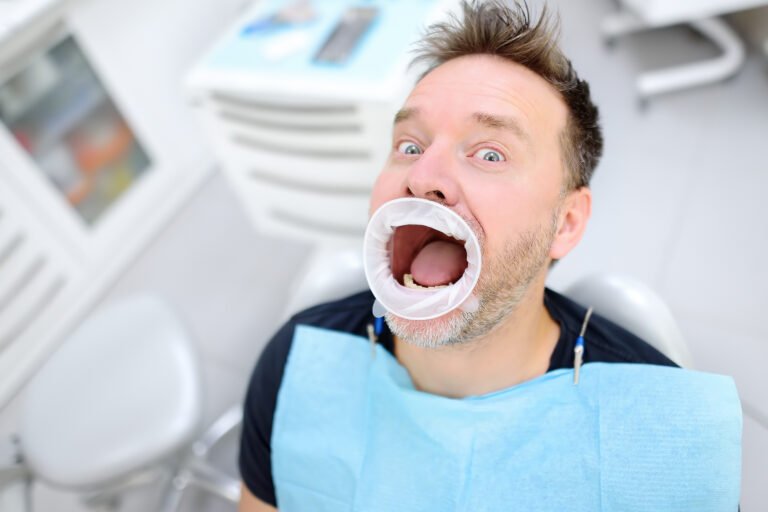
post-dental headaches and neck pain
Why Do I Get Headaches After the Dentist?
Let’s start with something we can all agree on. No one leaves the dentist thinking, “Wow, that was like a spa day for my neck.”
You go in for a cleaning. You come out feeling like you auditioned for a role as a folding lawn chair.
And yet, many people are surprised when they experience post-dental headaches and neck pain after what seemed like a perfectly routine appointment.
Here’s the thing. It’s not mysterious. It’s mechanical.
And when you understand the biomechanics, the connection between dentistry and chiropractic care starts to make a lot of sense.
The Jaw-Neck Relationship Happens every time!
During most dental procedures, three things happen:
- Your mouth stays open for an extended period.
- Your head is positioned in slight extension.
- Your neck muscles are under constant low-grade tension.
That combination might not seem dramatic, but your jaw, neck, and skull function as an integrated system.
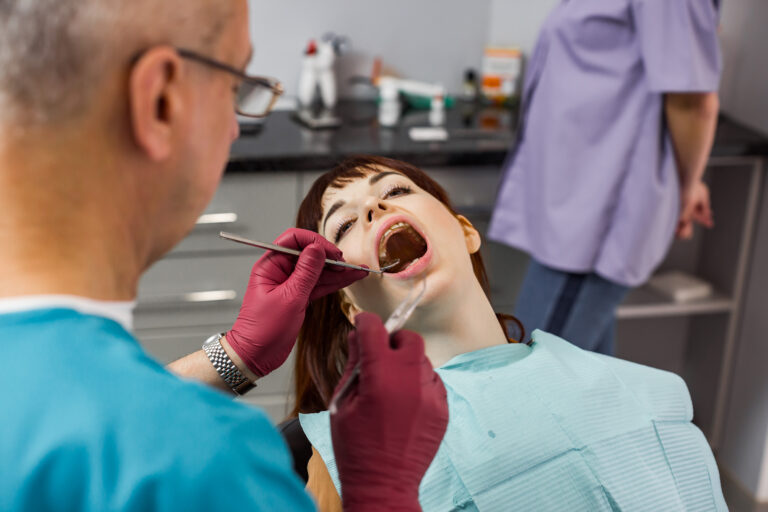
Research shows an extensive link between jaw dysfunction and neck pain. Since the chewing muscles are closely related to the neck, mobility issues in the neck directly influence the function of the jaw. A common assumption was also highlighted in this study regarding the potential impact of manual therapy on the jaw for improving mobility and reducing pain in the neck, as well as the influence of head posture, neck range of motion, and jaw pain.
In other words, your neck helps control your jaw. When one gets irritated, the other tends to join in. It’s a bit like two kids sitting beside each other in class. Once one starts acting up, the other suddenly thinks that’s a great idea.
This is one of the most common contributors to post-dental headaches and neck pain. It is not that the dental work was wrong. It is the surrounding muscles and joints that get strained in the process.
Sustained Jaw Opening Is a Workout You Didn’t Train For
Try holding your mouth open wide for five minutes.
Now imagine doing that for forty-five minutes.
The muscles involved in mastication, particularly the masseter and temporalis, are powerful but not designed for prolonged isometric holding.
When these muscles fatigue, they increase tone and can refer pain into the temples, forehead, and behind the eyes. That pattern often mimics tension-type headaches.
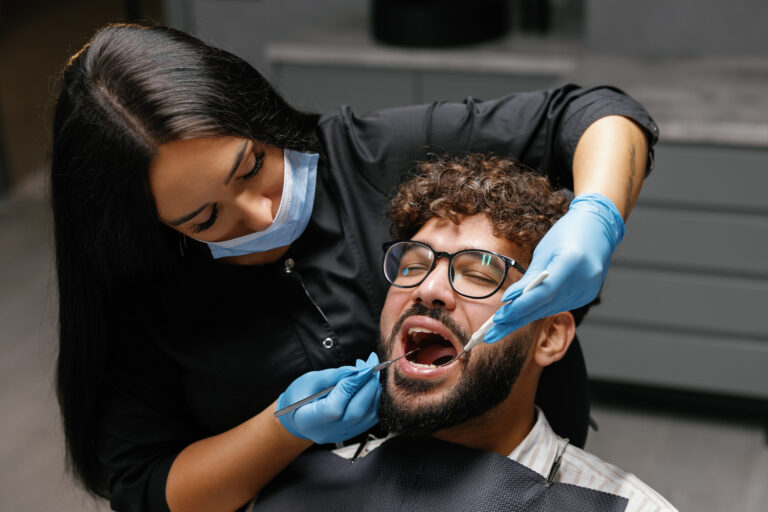
Research shows the jaw and the upper neck are closely connected in several ways: structurally, mechanically, and through the nervous system. Basically, they’re part of the same team.
In the brainstem, the nerves from the jaw and the neck actually meet and share information. So when one of them sends a pain signal, the brain sometimes can’t tell exactly who started the argument. It’s a bit like two siblings yelling from the back seat. You just know something’s wrong, but you’re not entirely sure who started it.
When we address the neck and jaw together, people feel better.
This is exactly why chiropractic care can play a meaningful role after dental procedures.
dental headaches and neck pain
Cervical Positioning Matters More Than We Think
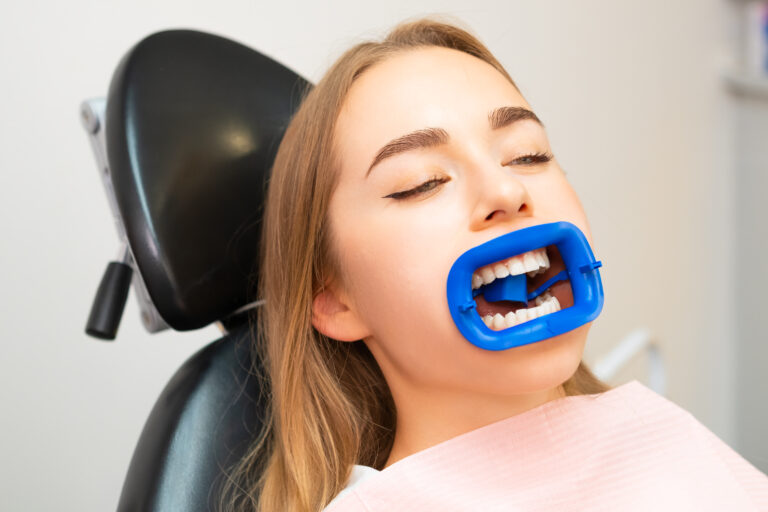
During dental work, your head is often tilted back into extension. The same is true when our head is tilted forward, looking at a smartphone.
That position:
- Increases compressive forces on the neck joints
- Activates deep neck extensors for prolonged periods
- Alters joint mechanics and muscle firing patterns
- Interferes with the blood supply and nerve supply to the brain
Sustained neck extension or flexion has been associated with increased joint loading and muscular fatigue. Furthermore, when the upper or lower jaw sits too far forward, it can change how the head balances on the neck. Then the neck muscles have to work overtime to keep everything upright. It’s a bit like stacking a bowling ball slightly off-center. Something else has to work harder to keep it from tipping over.
A common complaint in my office from patients after they visit the dentist is neck and jaw pain. Which makes sense based on the position of the neck and jaw and the demand for those structures. When that load continues for 30 to 90 minutes, it is not unusual for patients to experience stiffness, headache, or upper trapezius tightness that day or the next. That cascade often becomes what patients describe as post-dental headaches and neck pain.
Similarly, with chiropractic care, it is not uncommon to have soreness or achiness after a treatment. That is totally normal and evidence that the body is adapting to the changes.
These reactions after treatment are not because dentistry caused harm. But due to the positioning creating strain and stress on the muscles and joints.
When Is This A Problem That Needs To Be Addressed?
The presence of neck pain was shown to be associated with jaw dysfunction (TMD) 70% of the time. Often, the post-dental neck pain will linger for a while and disguise itself as muscle fatigue that, when touched, is sensitive. Without being treated with an adjustment, it will often progress into:
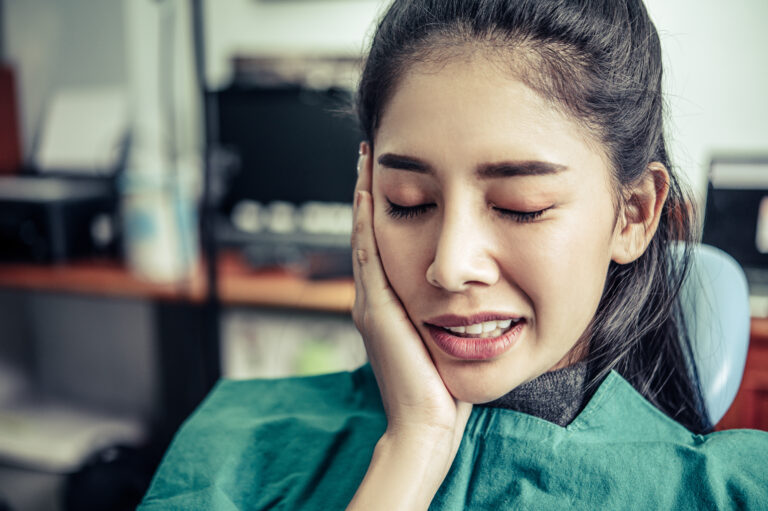
- A dull, band-like headache
- A feeling of “pressure” in the temples
- Tightness at the base of the skull
- Neck stiffness the following morning
- Tender jaw clicking when chewing or yawning
- Tinnitus (ringing in the ear)
- Electric zapping pain to the face (trigeminal neuralgia)
The upper cervical spine has strong nerve connections with the trigeminal nerve system, which is heavily involved in facial and jaw sensation.
This means irritation or mechanical stress in the upper neck can refer pain into the head via the nerve coming from the neck. If you are female, experiencing neck pain, and your job or day is spent working on a computer for 7-8 hours, you are more likely to exhibit evidence of TMD.
So when someone develops post-dental headaches and neck pain, the issue is often neuromuscular, not dental.
This is where chiropractic care becomes highly relevant.
What Chiropractic Care Actually Addresses
Let’s clarify something important. Chiropractic care does not replace dental care. Dentists correct occlusion, restore teeth, manage oral health, and perform surgical procedures.
When a patient experiences post-dental headaches and neck pain, the problem is usually in these areas.
- Cervical joint mechanics
- Muscle tone imbalances
- TMJ-associated loading patterns
- Cranial and upper cervical tension
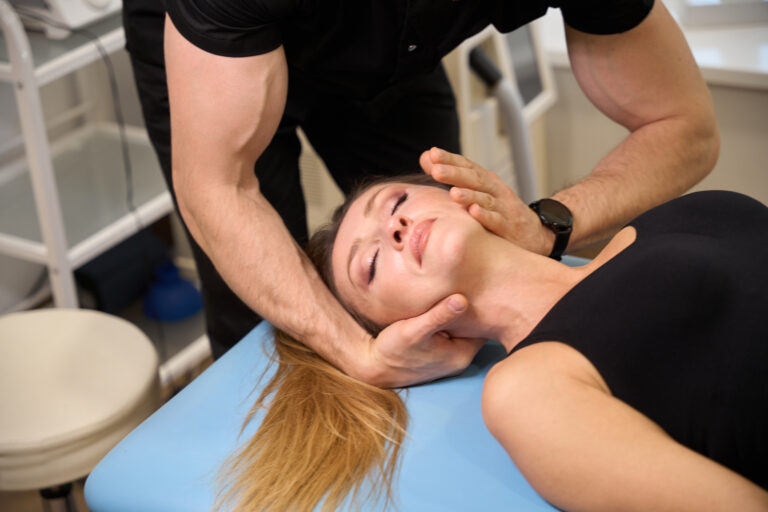
Chiropractors address the joints, muscles, and nerves so that in a year from now, for example, you are moving well, staying active, and your body feels reliable again. At that point, chiropractic care is not really about fixing problems anymore. It is just something you do periodically to maintain mobility and stability so you can keep doing the things you enjoy.
Chiropractic care focuses on treatment strategies such as exercises, manual therapy, stretching, and education to target the painful and sensitive muscles in order to reduce pain in the orofacial region.
Reducing cervical joint irritation often reduces headache symptoms.
That is not magic. That is biomechanics!
Cranial Tension, Jaw Pain, and Head Pressure
The skull is composed of multiple sutured bones with connective tissue interfaces. While cranial motion is a debated subject, manual cranial interventions have demonstrated effects on autonomic regulation and muscle tone.
Research shows the jaw, head, and upper neck are all closely connected. They share muscles, joints, and nerve pathways. In fact, the nerves from the jaw and neck meet in the brainstem and pass along the same pain signals. So when something starts bothering one area, the brain sometimes has trouble figuring out who started the trouble.
Not surprisingly, people with jaw problems often also have headaches or stiffness in the upper neck. These areas work like teammates. When one struggles, the others often feel it too. That’s why improving movement and function in the upper neck can sometimes help reduce headaches and the feeling of pressure in the head.

This explains why:
- Jaw problems cause headaches
- Neck dysfunction causes facial pain
- Dental procedures can trigger neck pain or head pressure
Cranial and upper cervical techniques used within chiropractic care aim to reduce this tension and normalize muscle activity.
This can significantly reduce post-dental headaches and neck pain, especially when addressed early.
Who Is Most Likely to Experience Post-Dental Headaches and Neck Pain?

Certain patients are more susceptible:
- Individuals with previous neck injuries
- Patients with a history of migraines
- Those with known TMJ dysfunction
- People who work at desks for prolonged hours
- Individuals with forward head posture (everyone who doesn’t support their elbow with the hand not using the phone)
For these patients, even routine dental procedures can amplify pre-existing tension patterns.
Early intervention through chiropractic care can prevent those symptoms from lingering.
The Bigger Picture
The human body does not compartmentalize the way insurance forms do.
You cannot stress the jaw without influencing the neck. You cannot stress the neck without influencing the head.
Understanding this interconnected system allows patients to make proactive decisions.
Instead of waiting weeks for symptoms to resolve, patients experiencing post-dental headaches and neck pain can address the mechanical component early. Schedule a chiropractic treatment after a dental appointment.
And when that mechanical component improves, so does comfort.
Final Thoughts
Dental care is essential. It improves health, function, and quality of life.
But dental positioning is mechanically demanding.
Sustained jaw opening, cervical extension, and neuromuscular fatigue create predictable strain patterns. Research supports the connection between cervical dysfunction, TMJ stress, and headache presentation.

If you experience post-dental headaches and neck pain, consider that the issue may be musculoskeletal rather than dental.
Appropriate chiropractic care can support recovery by addressing cervical mechanics, muscle tone, and cranial tension patterns.
Not because something went wrong. But because your body worked hard.
And sometimes, after holding your mouth open like you were trying to catch a snowflake for forty-five minutes, your neck would appreciate a little professional courtesy.