
Understanding Concussion Rehabilitation at a Chiropractic Clinic
Getting Back to Life After a Concussion
A concussion is a type of brain injury. It often happens after a hit to the head or a hard fall that makes the brain move quickly inside the skull. Even if scans look normal, the brain still needs time and the right kind of help to heal.
Symptoms can be frustrating. People often report headaches, foggy thinking, neck pain, trouble focusing, balance issues, and light or noise sensitivity. These can get in the way of school, work, sports, and even simple family time. It can feel like life is on pause.
Across Ontario, concussion rehabilitation is changing. Many clinics now follow current research that supports active, guided recovery instead of only rest. At a modern chiropractic clinic in Kanata, concussion care often means a team approach, clear education, and a step-by-step plan back to normal activities.
In early spring, we still see winter sport falls, slips on icy sidewalks, and early training for spring sports. This is when many people start asking how much activity is safe, how long recovery might take, and what a chiropractic clinic can actually do for concussion rehabilitation in Ontario. That is what we will walk through here: timelines, safe activity levels, and what to expect from concussion care in a chiropractic setting.
Why Concussions Need More Than Just Rest
For a long time, the common advice was to sit in a dark room and wait. Current concussion research has shifted away from that idea. Short rest is helpful at first, but after that, gentle, guided activity is often better than doing nothing.
Too much rest can:
- Lead to deconditioning and weakness
- Increase anxiety and fear of movement
- Make sleep and mood problems worse
- Make it harder to return to school, work, or sport
Most people go through a few basic phases after a concussion:
- Early phase: protect the brain, keep symptoms from spiking, and avoid risky activity
- Subacute phase: slowly bring back light daily tasks and gentle movement
- Later phase: targeted rehab for any lingering problems like dizziness, neck pain, or trouble focusing
Some symptoms are red flags and need emergency care right away, such as:
- Worsening confusion or trouble staying awake
- Repeated vomiting
- Seizures
- Weakness, numbness, or trouble speaking
Other symptoms, like headaches, mild dizziness, and neck pain, are often managed safely in a chiropractic and rehab setting. Most people do recover well with a good plan, but if symptoms last, structured concussion rehabilitation in Ontario can help keep things on track instead of just waiting and hoping.
How Chiropractic Clinics Support Concussion Healing
Chiropractors who work with concussion care focus on the whole person, not just the head. A first step is a careful history and screening. That often includes:
- Details about how the injury happened
- A neurological check for coordination, strength, and reflexes
- A musculoskeletal exam of the neck, upper back, and jaw
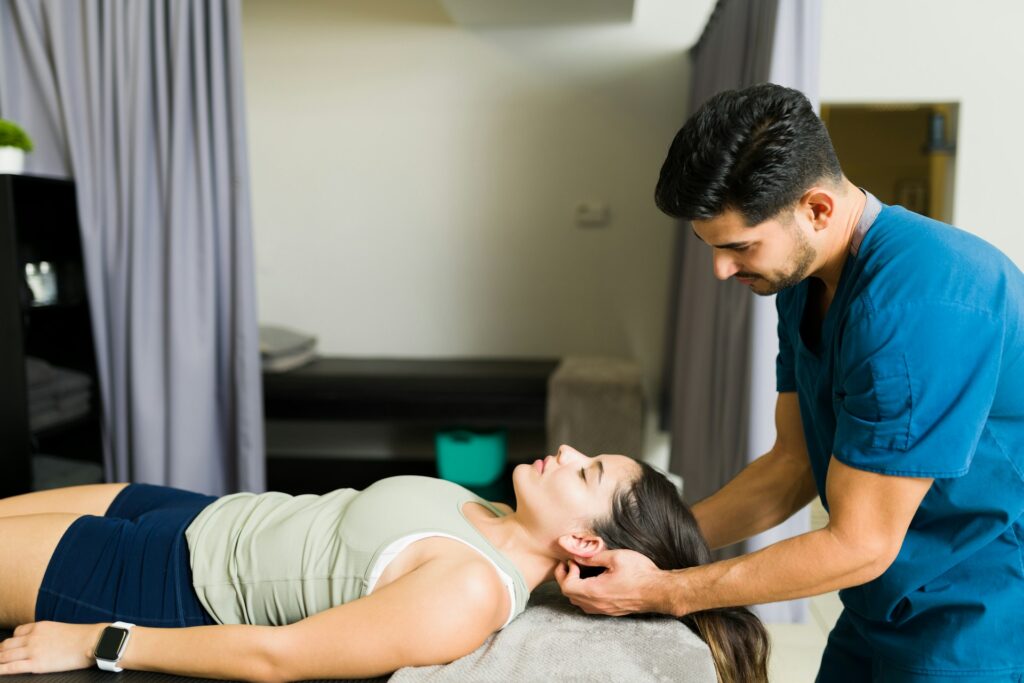
Neck injuries are very common with concussions. Stiff joints and tight muscles in the neck can make headaches, dizziness, and visual strain feel worse. Addressing these issues can often reduce some of the symptoms people blame only on the concussion.
At a clinic like Relief Lab, care may include:
- Gentle joint mobilizations to help stiff neck and upper back joints move better
- Soft-tissue work to ease muscle tension and trigger points
- Exercise-based rehab, with movements paced to match what the person can tolerate
Concussion care often works best as part of a team. Chiropractic clinics commonly communicate with:
- Family physicians
- Physiotherapists
- Massage therapists
- Optometrists and vision providers
- Mental health professionals
Another key piece is paperwork and communication. Clear notes and return-to-play or return-to-work forms help schools, sports teams, and workplaces understand what is safe and what should wait.
What to Expect From Concussion Rehabilitation in Ontario
A first concussion visit at a chiropractic clinic usually has a few parts. We often start with intake forms and symptom questionnaires, then talk through injury history, previous concussions, and current concerns. After that comes a physical and neurological exam, looking at balance, eye movements, neck mobility, and how symptoms change with different tasks.
From there, an individual plan is built. That might include:
- Pacing daily activities so the brain is active but not overwhelmed
- A graded plan to return to school or work
- Sub-symptom threshold cardio, like light walking or cycling, as tolerated
- Hands-on care for neck and back pain
- Simple home exercises to support recovery
Follow-up visits track progress with symptom scores and functional tests. We compare how you feel, how you move, and what you can do now compared to earlier visits. The plan is adjusted as your brain and body heal.
For concussion rehabilitation in Ontario, many people use extended health benefits to help cover chiropractic and massage therapy services. It can be helpful to ask your insurer about your coverage for these types of care.
Spring can bring new questions too. People getting ready for spring sports might ask about baseline testing, or how to safely return to play after a winter fall. Families planning March Break activities may need guidance on how much screen time, travel, or sport is reasonable while still healing.
Key Tools Used in Modern Concussion Rehab
Modern concussion rehab is more than a quick check and a pat on the back. Clinics often use several tools to understand how the brain and body are working together.
Common assessment tools include:
- Balance testing in different stances and surfaces
- Vestibular and oculomotor exams to see how the eyes and inner ear respond
- Simple cognitive symptom screens that look at attention and mental fatigue
Vestibular and visual-vestibular rehab sounds complex, but the idea is simple. The brain, eyes, and inner ear need to work as a team. Carefully chosen exercises use:
- Eye tracking and focus tasks
- Gentle head movements while looking at a target
- Balance work that slowly challenges standing and walking
Graded aerobic exercise, like walking on a treadmill or using a stationary bike, can support recovery when planned correctly. Done below the level that triggers symptoms, it may help with blood flow, mood, and overall resilience.
Massage therapy often plays a supportive role. Many people with concussions also have:
- Tension headaches
- Neck stiffness
- Upper back and shoulder tightness
- Trouble relaxing enough to sleep
Hands-on work for those areas can improve comfort and make it easier to handle daily tasks and rehab exercises. Across all of this, the key is a gradual, monitored approach. Each person gets a plan based on their own symptoms, goals, and pace of recovery, rather than a one-size-fits-all template.
Returning Safely to School, Work, and Sport
Returning to regular life after a concussion is not an all-or-nothing event. It works best as a step-by-step process, guided by symptoms and objective measures.
For school, a return-to-learn plan might include:
- Shortened days at first
- Reduced screen time and smaller homework loads
- Breaks in quiet spaces
- Extra time for tests or assignments, when needed
For work, a gradual plan often focuses on:
- Adjusted hours and more frequent breaks
- Changes to lighting or noise when possible
- Limiting heavy physical tasks at first
- Building up to full duties over time
Return-to-sport stages commonly used in Ontario move from light activity to full competition. A typical path is:
- Light aerobic activity with no risk of contact
- Sport-specific drills without contact
- Non-contact practice with the team
- Full contact practice, then full games
It is important not to rush this process. Returning to play too early raises the risk of another injury before the brain has healed. With professional guidance, symptom tracking, and clear communication, sport decisions become safer and more confident.
Throughout this process, a clinic like Relief Lab works to keep everyone on the same page. That might mean sharing written guidelines with teachers, coaches, trainers, and employers, so expectations match your current abilities and recovery stays on track.
Take The Next Step Toward Safe, Confident Recovery
If you are ready for a more structured and evidence-based approach to healing, our team at Relief Lab is here to help. Learn how our personalised approach to concussion rehabilitation in Ontario can support your daily life, work, and sport. We will work with you to understand your goals, design a clear plan, and adjust it as you progress. Reach out to our team today through our contact us page to book an appointment or ask questions about your recovery options.